
Trump’s China trip is engineered as a deal factory—with Elon Musk and Tim Cook as closer-in-chief candidates on Boeing jets and soybeans while whole sectors sit on the bench.
Story Snapshot
- The White House invited more than a dozen top chief executives, including Elon Musk and Tim Cook, to Beijing from May 13-15, 2026, to land trade deals and investment pledges [1][2][3].
- A Boeing purchase by China—potentially hundreds of aircraft—sits atop the target list, alongside expanded agricultural purchases like soybeans [1][2].
- The invite list favors firms with deep China exposure; notable absences include semiconductor and energy chiefs, signaling a focused, not comprehensive, agenda [1][2][3].
- Critics warn of corporate influence overshadowing strategy, while supporters argue big deals beat ideology in moving the needle [2][3].
Who Is Going And Why It Matters For The Deals
Bloomberg-sourced reporting says the White House tapped a roster of marquee chief executives—Tesla and SpaceX’s Elon Musk and Apple’s Tim Cook among them—to accompany the President to Beijing, with the explicit aim of securing large trade agreements and new investments [1]. A White House official described more than a dozen leaders across technology and finance, including Goldman Sachs’ David Solomon, on board for announcements centered on Boeing aircraft and American soybeans [2]. CBS News echoed the participation of Musk and Cook as part of Trump’s high-powered delegation [3].
These names are not ceremonial. Musk and Cook preside over companies with vast consumer and manufacturing stakes in China, positioning them to unlock operational concessions, market access, and confidence-building gestures in both directions [1][3]. Their visibility can compress negotiation timelines that stall at mid-levels. From an American conservative vantage, deploying private-sector negotiators who have skin in the game aligns with results-first pragmatism: jobs, export orders, and real supply-chain advantages beat sterile communiqués, provided the public interest remains the yardstick.
What The Agenda Prioritizes And What It Sidelines
The delegation’s commercial priorities skew toward aviation and agriculture. Reports point to a potential blockbuster order for Boeing—up to 500 single-aisle jets plus additional widebodies—China’s first major Boeing purchase since 2017, with Boeing’s chief executive Kelly Ortberg expected to join [1]. A White House official also flagged a soybean buying package as part of the expected announcements [2]. The focus leaves advanced semiconductors and energy notably light; Reuters-linked reporting suggests Nvidia’s Jensen Huang is not expected, signaling a narrower mission set [1].
That sectoral selection will cause debate. Concentrating on Boeing and farm goods acknowledges where deals can close quickly and move domestic employment and export figures. It also avoids triggering security tripwires that accompany chip technology. However, leaving semiconductor and energy leaders off the plane invites the charge that a vital layer of American competitiveness and deterrence economics is missing. On balance, prioritizing fast-closing, high-visibility deals can be justified as a first inning, not the whole game.
Influence, Optics, And The Conflict Chorus
Semafor reported the invite list targeted companies “that would benefit, broadly, from an open door to China,” and noted that large American firms often steer policy outcomes more than abstract ideology [2]. CBS News framed the involvement of billionaire chief executives as both powerful and potentially controversial, given their sizable commercial stakes in China [3]. Those assertions carry weight: Musk and Cook must answer to shareholders, and their firms rely on Chinese manufacturing and consumers. The conflict critique is logical, though it lacks on-record, named allegations tied to this specific trip [2][3].
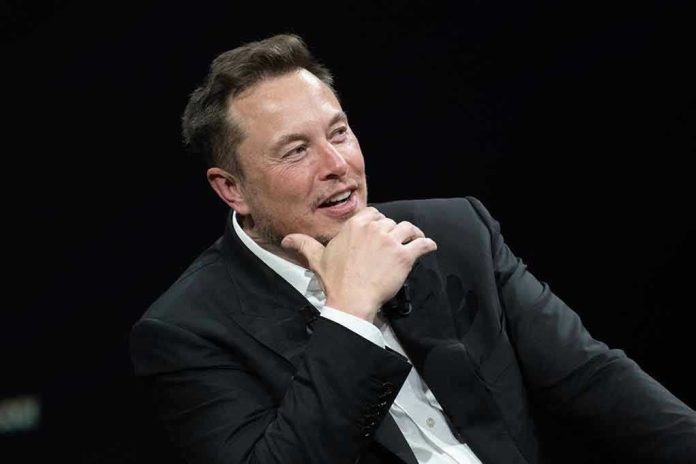
Billionaire and former Trump administration official Elon Musk will be among the high-powered business leaders who will be a part of the U.S. delegation to China this week, according to a list of names from a White House official. https://t.co/ipPoXM0dwX
— CBS News (@CBSNews) May 11, 2026
Common sense guardrails can reconcile the tension. The administration should keep negotiations anchored to national outcomes—aircraft orders, farm exports, verifiable market access—while insulating security-sensitive topics from corporate bargaining. Congress can demand post-visit transparency on commitments. If the trip lands firm purchase agreements for Boeing aircraft and American soybeans, plus definable steps on fair treatment for U.S. firms, the practical gains will speak louder than the optics [1][2]. If not, the influence narrative hardens quickly.
How To Judge Success When The Plane Lands
Clear metrics will decide whether this delegation strategy earns trust or suspicion. Signed purchase contracts for Boeing with delivery schedules, not just memoranda, would mark a material win and a long-tail boost for American manufacturing jobs [1][2]. Announced volume and pricing for soybean buys would translate immediately for farm states. Any statements from Musk or Cook should be matched to verifiable changes in licensing, app store access, supply-chain security, or local regulatory relief for American workers and customers [1][2][3]. Absent that, the trip risks reading as access without leverage.
Sources:
[1] Web – Apple CEO Tim Cook, Elon Musk to join President Donald Trump for …
[2] Web – Trump invites CEOs of Tesla, Goldman, Apple, and others to China
[3] Web – Elon Musk and other CEOs among Trump’s U.S. delegation heading to …