
The most revealing moment in Washington health politics right now is watching two people who agree on crushing medical-industry power still manage to collide on the question voters feel in their bones: can the government lower costs without breaking trust.
Story Snapshot
- Sen. Elizabeth Warren pressed HHS Secretary Robert F. Kennedy Jr. in a Senate Finance budget hearing, with the sharpest friction centered on vaccine access and competence.
- RFK Jr. defended the administration’s broader health agenda as an effort to weaken industry control, especially in how doctors get paid.
- A separate, quieter storyline sits underneath the shouting: Warren and the administration share overlap on the need to boost primary care by changing payment incentives.
- The political problem is simple: cost-cutting sounds great until Americans suspect ideology or favoritism is driving which care gets promoted and which gets squeezed.
A Hearing About the 2027 Budget That Turned Into a Test of Trust
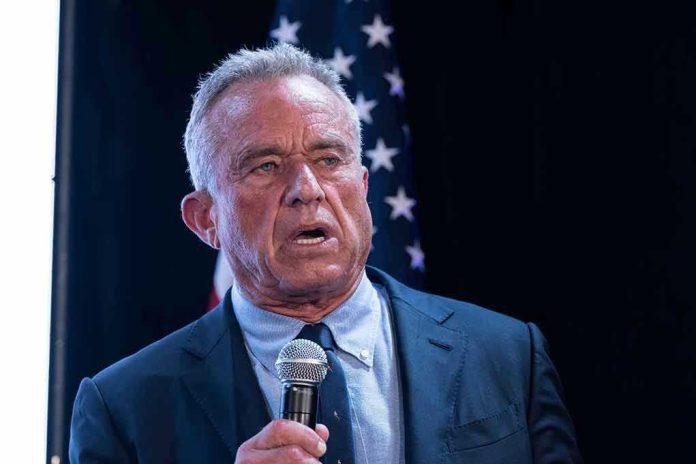
Sen. Warren’s questioning of RFK Jr. during the Senate Finance Committee hearing on President Trump’s 2027 budget request showcased the core fight: oversight versus executive ambition. Warren pushed on vaccine access, putting RFK Jr. on defense about whether the department’s decisions would make it harder, not easier, for Americans to get routine immunizations. RFK Jr. pushed back, framing the department as taking on entrenched interests and resisting what he portrays as capture.
The clash matters because it lands on a voter’s lived experience. People over 40 remember the old bargain: you work, you pay, you get decent care when you need it. Healthcare inflation broke that bargain, and every promise to “lower costs” now carries an unspoken fear that the savings will come from restricting access, not from removing waste. Warren’s role is to probe those fears publicly. RFK Jr.’s role is to convince the country he’s cutting fat, not muscle.
The “Lower Costs” Headline Misses the Policy Fight Underneath
The viral framing suggests a dispute about lower drug prices, but the strongest documented policy storyline in the research points elsewhere: the plumbing of American medicine, especially physician payment. The administration’s reform push targets how Medicare and related systems reward specialists more richly than primary care, even when primary care forms the front door to the entire system. That matters because a country with a primary-care shortage doesn’t just pay more; it pays later, and pays twice.
Primary care has become the odd job nobody wants: high responsibility, punishing paperwork, and comparatively lower compensation. When policymakers talk about paying primary care doctors more, they aren’t trying to hand out gold stars. They’re trying to stop the bleeding that sends patients straight to expensive specialists, urgent care centers, and hospital ERs. Warren has spent years warning about industry influence in healthcare. On payment reform, her long-standing critique and the administration’s stated target can overlap.
Why RFK Jr., Dr. Oz, and Warren Finding Common Ground Shouldn’t Surprise You
People treat unlikely agreement in Washington like a unicorn, but this one has a logic. Industry groups thrive in the dark: complex billing codes, opaque negotiations, and professional associations that can muscle regulations toward their preferred revenue streams. Rebalancing payments toward primary care challenges that ecosystem. The conservative case for that rebalancing is practical, not utopian: fewer middlemen, fewer distorted incentives, and a system that rewards early, cheaper intervention rather than late, catastrophic treatment.
That overlap doesn’t make Warren and RFK Jr. allies; it makes them temporary passengers on the same policy train. Warren’s instincts favor regulation and enforcement. RFK Jr.’s public posture emphasizes skepticism of entrenched institutions and claims of captured agencies. Those approaches can point at the same targets while disagreeing on method and competence. Common sense says voters should welcome any serious attempt to weaken special-interest chokeholds, but also demand proof the replacement system won’t create new chokeholds with different logos.
The Ethics Shadow That Keeps Following RFK Jr.
Warren’s scrutiny did not begin with this budget hearing. Earlier disputes included ethics questions tied to RFK Jr.’s involvement with litigation connected to an HPV vaccine, with RFK Jr. saying he would stop collecting certain fees while other questions remained in public reporting. Oversight like this can look like political theater, but it also speaks to a basic expectation: the nation’s top health officials must avoid even the appearance of profiting from policies and controversies they influence.
Conservatives often bristle at performative hearings, and for good reason; Congress loves cameras more than results. Still, the ethical standard should stay high because healthcare policy moves real money. When billions flow through contracts, coverage decisions, and reimbursement rules, conflicts of interest become more than personal scandals; they become price signals that can distort the system. The cleanest reform agenda is the one that doesn’t require voters to “trust the process” while ignoring incentives that would never pass a workplace audit.
The Real Political Risk: A Coalition That Can’t Stay Assembled
Payment reform is the kind of unglamorous fix that can improve care and cut costs over time, but it takes steady governance. The minute the debate collapses into personality fights—vaccine access accusations on one side, “industry stranglehold” counterpunches on the other—the coalition that could actually pass structural reform starts to dissolve. Specialty lobbies and entrenched interests don’t have to win the argument; they only have to stall it until the news cycle moves on.
Americans don’t need another crusade; they need measurable outcomes. If the administration wants credibility on “lower healthcare costs,” it must show where the savings come from and who benefits, in plain English. If Warren wants credibility as a watchdog, she should keep the spotlight on access and ethics without pretending every reform attempt is automatically a threat. The open question from this exchange is whether anyone can keep their eye on the boring levers that actually control the bill.
JUST NOW: RFK Jr. calls out Sen. Elizabeth Warren for criticizing the administration's push to lower health care costs for the American people – telling her Congress has more power to help consumers than he does.
WARREN: “You and Donald Trump are actually making the problem… pic.twitter.com/9ylgMHB9GV
— Fox News (@FoxNews) April 22, 2026
The next fight won’t be over who talked louder in a hearing; it will be over whether Congress and HHS can turn a rare point of agreement—paying for primary care in a way that makes sense—into law without letting the vaccine wars, personal distrust, and lobby pressure drag the whole project into the ditch.
Sources:
https://www.theargumentmag.com/p/rfk-jr-dr-oz-and-elizabeth-warren
https://www.cbsnews.com/video/watch-warren-and-rfk-jr-clash-over-vaccine-access/