Six American service members are dead after Iran’s retaliatory strike—proof that when Washington finally hits back hard, the price of deterrence can be immediate and brutal.
Quick Take
- CENTCOM confirmed the U.S. death toll rose to six following Iran’s retaliation after U.S.-Israeli strikes inside Iran.
- U.S.-Israeli “Operation Epic Fury” reportedly hit more than 1,000 Iranian targets tied to missiles, naval forces, and security infrastructure.
- Iran responded with ballistic missiles and drones aimed at U.S. positions across multiple Gulf countries and Israel; most were intercepted, but some strikes got through.
- All six U.S. deaths were tied to a single attack on a Kuwait facility, with identities withheld pending family notification.
- A separate friendly-fire incident in Kuwait downed three U.S. fighter jets; all aircrew ejected safely, underscoring the risks of coalition air defense under pressure.
CENTCOM confirms six killed as retaliation breaks through defenses
U.S. Central Command confirmed Monday that six American service members were killed after Iran launched retaliatory attacks across the Gulf region following U.S.-Israeli strikes in Iran. Early reports put fatalities at three, then four after one wounded service member died, before the total climbed to six when two sets of remains were recovered from a struck facility. Officials withheld names pending next-of-kin notification.
Available reporting contains a key operational detail with major implications: CBS News’ live updates said all six deaths were linked to a single Iranian strike on a Kuwait facility. Other coverage described Iranian attacks reaching or targeting U.S. locations across Bahrain, Iraq, Jordan, and additional Gulf states, reflecting the breadth of the retaliation. That distinction matters because it shapes how Americans should understand the immediate vulnerability of forward bases.
What “Operation Epic Fury” targeted—and why it escalated fast
The reported trigger for Iran’s response was the start of “Operation Epic Fury,” a U.S.-Israeli campaign described as massive and multi-day. The operation reportedly struck more than 1,000 targets tied to Iran’s missile production, naval capabilities, and security infrastructure, along with forces connected to domestic crackdowns. The most consequential claim in the research is that Iran’s Supreme Leader, Ayatollah Ali Khamenei, was killed in the initial strikes.
President Trump framed the campaign as a last opportunity to neutralize Iran’s nuclear and missile threat, while Defense Secretary Pete Hegseth emphasized “surgical” and “overwhelming” destruction of key military capabilities rather than an open-ended occupation. Those statements align with a conservative preference for clear objectives and decisive force, but the quick rise in U.S. casualties illustrates a hard reality: even limited aims can trigger broad retaliation.
Iran’s multi-nation missile barrage hits a region packed with U.S. partners
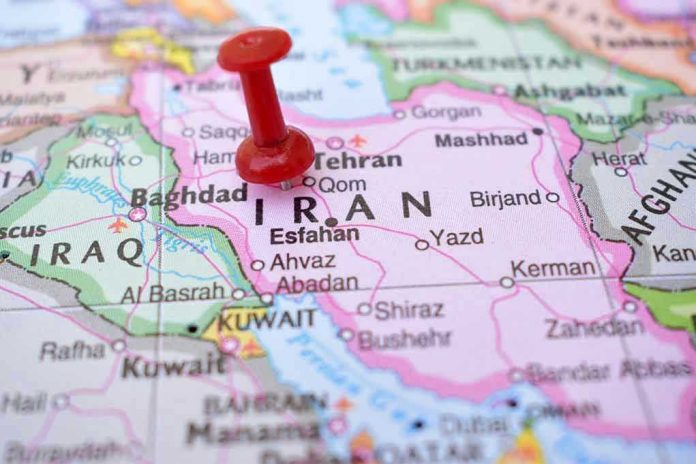
Iran’s response was described as a combined wave of ballistic missiles and drones aimed at U.S. bases and regional partners, with reported impacts spanning Kuwait, Bahrain, Iraq, Jordan, the UAE, Qatar, Saudi Arabia, Israel, and other locations. Reporting said most incoming weapons were intercepted, yet some strikes still landed, including in areas near civilians. That risk is amplified when bases sit close to population centers and critical infrastructure.
The research also described maritime stakes, citing Iranian harassment of shipping lanes over many years and CENTCOM messaging that the era of disruption must end. In the current fight, one update claimed Iran initially surged ships into the Gulf of Oman before that presence was reduced to zero by Monday. Even without independent confirmation from Tehran, the focus on sea lanes signals why Washington is tying military action to economic stability and global energy security.
Friendly fire in Kuwait highlights coordination risks during high-tempo defense
A separate incident underscores how quickly battlefield complexity can produce new dangers—even among allies. Axios reported that three U.S. fighter jets were downed by friendly fire from Kuwaiti air defenses during the operation, with all six aircrew ejecting safely. That episode did not account for the six fatalities, but it points to a serious challenge: dense airspace, fast-moving threats, and split-second identification decisions during missile defense surges.
For Americans watching from home, the incident is also a reminder that coalition warfare requires more than shared goals—it requires disciplined command-and-control, interoperable systems, and rules of engagement that prevent tragic errors. The reporting indicates investigations are underway, but details remain limited. What is clear from the known facts is that high-volume missile attacks can stress even modern defensive networks and decision chains.
What’s known, what isn’t, and what to watch next
Officials said major combat operations were ongoing, and President Trump suggested the campaign could last weeks. The research includes casualty estimates inside Iran, including a Red Crescent figure around 550 deaths, alongside rumors of far higher totals that were not substantiated. With reporting largely U.S.-official-centric, the public should treat battlefield claims cautiously while focusing on confirmed facts: six Americans killed, broad regional strikes, and an expanding military footprint.
US casualties rise to 6 following Iranian retaliation for massive strikes https://t.co/PsxTzozbLt
— ConservativeLibrarian (@ConserLibrarian) March 2, 2026
The next indicators to watch are practical rather than political: whether Iran sustains missile salvos, whether U.S. forces surge further into the region, and whether air-defense coordination problems reappear. For a conservative audience that values constitutional clarity and mission discipline, the central question is whether the administration can keep objectives limited, protect U.S. personnel, and end the threat—without drifting into the kind of indefinite conflict Americans have rejected for decades.
Sources:
US casualties rise to 6 following Iranian retaliation for massive strikes
Iran-U.S. war Day 3 live updates: American deaths, Israel, Gulf allies hit by missile strikes
3 US fighter jets downed by friendly fire in Kuwait