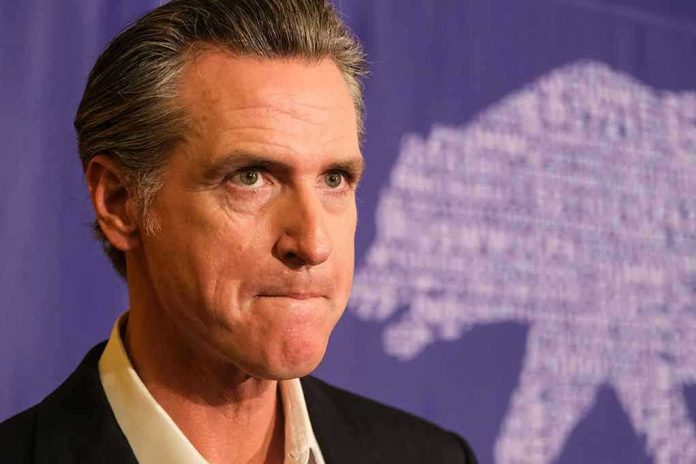
California Governor Gavin Newsom stood on foreign soil and accused President Trump of obliterating eight decades of American diplomatic achievements, positioning his state as an alternative global power while the federal government withdrew from international commitments.
Story Snapshot
- Trump withdrew the U.S. from the UN climate framework and 65 other international organizations in early January 2026
- Newsom confronted Trump at the World Economic Forum in Davos, calling global leaders “pathetic” for failing to resist the administration
- California leverages its status as the world’s fourth-largest economy to pursue independent diplomatic initiatives
- The clash represents a fundamental debate about American sovereignty versus multilateral engagement
When Governors Play Secretary of State
Newsom traveled to Davos, Switzerland, in late January 2026 and transformed what should have been a routine economic forum into a referendum on Trump’s foreign policy. The governor called out world leaders as “pathetic” for their tepid response to Trump’s withdrawal from international organizations. His office claimed the Trump administration blocked him from speaking at the USA House event, though a Fortune spokesperson offered a more ambiguous explanation about accommodation issues. Trump responded during his own Davos address, acknowledging their former friendship while expressing frustration with California’s governance, particularly regarding crime.
The Constitutional Question Nobody Wants to Answer
The U.S. Constitution grants the president exclusive authority over foreign policy, yet Newsom operates as if California possesses independent diplomatic standing. The state’s participation at the UN Climate Change Conference in Brazil exemplifies this approach. California “stepped into the U.S. leadership void” according to the governor’s office, a characterization that raises fundamental questions about federalism. When a state government explicitly positions itself as an alternative to federal foreign policy, you either have a constitutional crisis or a governor running for president. In Newsom’s case, both explanations fit.
The Numbers Behind Trump’s Strategic Withdrawal
Trump pulled the United States from 65 international organizations plus the UN climate framework. These institutions represent decades of accumulated commitments spanning NATO, climate accords, trade agreements, and multilateral forums established since World War II. Newsom characterizes this as destroying “80 years of alliances,” suggesting these withdrawals abandon the foundational architecture of American global leadership. Trump’s defenders counter that many of these organizations constrain American sovereignty while delivering minimal benefits, transforming multilateralism into bureaucratic paralysis that advantages competitors like China.
California’s Economic Leverage and Diplomatic Ambitions
California’s economy ranks as the world’s fourth-largest by GDP, giving Newsom genuine international credibility that transcends typical gubernatorial authority. This economic power enables the state to negotiate independently with foreign governments on climate policy, trade relationships, and technology partnerships. Newsom’s office released a memo contrasting Trump’s “crony capitalism” with California’s “democratic capitalism,” framing the dispute as a choice between “an economy governed by shared rules, not favors, and competition, not corruption.” The language reveals presidential ambitions barely concealed beneath policy disagreements.
Who Benefits When America Steps Back
Trump’s withdrawal from international organizations creates immediate opportunities for China to expand influence in forums and negotiations previously dominated by American leadership. Newsom argues this retreat surrenders competitive advantages and cedes economic ground to geopolitical rivals. European allies face uncertainty about NATO’s future and American commitment to collective defense, particularly given Trump’s previous skepticism about the alliance’s value. The governor’s criticism resonates with traditional foreign policy establishments who view multilateral engagement as essential to American prosperity and security, though millions of voters clearly disagree with that assessment.
The 2028 Calculation Behind Every Statement
Newsom’s Davos performance serves dual purposes. He genuinely opposes Trump’s foreign policy direction, but he also positions himself as the Democratic standard-bearer for 2028. His high-profile international criticism appeals to Democratic voters concerned about American global leadership while establishing credentials beyond California’s borders. The governor’s accusation that the Trump administration slow-walked wildfire recovery funding adds domestic policy grievances to foreign policy disputes, constructing a comprehensive opposition narrative. Trump’s acknowledgment of their former friendship signals recognition that Newsom represents a formidable potential challenger, not merely a troublesome governor.
What This Means for American Foreign Policy
The Trump-Newsom conflict exposes fundamental disagreements about America’s global role. Trump prioritizes bilateral relationships and national sovereignty over multilateral commitments he views as constraining American interests. Newsom defends the post-World War II international order as essential to American prosperity and security. California’s independent diplomatic initiatives may encourage other states to pursue similar paths, fragmenting U.S. foreign policy messaging and creating confusion about American commitments. Whether Trump’s approach represents strategic recalibration or reckless abandonment depends entirely on whether you believe international organizations serve American interests or constrain them. The 2028 election will likely serve as the referendum that settles this question, at least temporarily.
Sources:
Newsom Says White House Blocked Him From Speaking at Global Forum
Newsom Takes His Trump Bashing to the Swiss Alps
Newsom’s Advice to World Leaders on Trump