

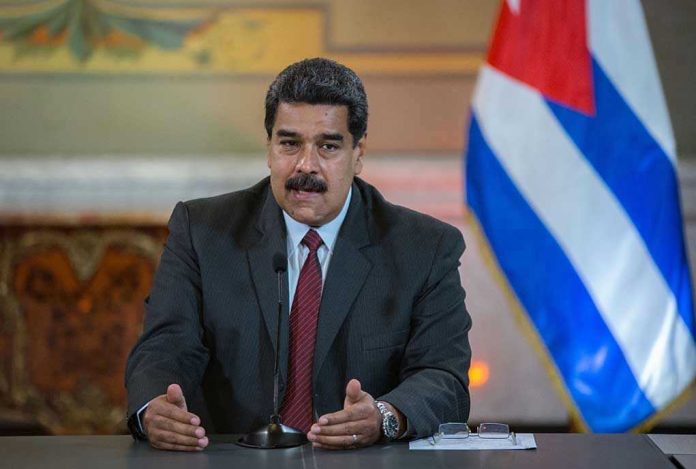
Reports that Nicolás Maduro tried to bargain a $200 million golden parachute and blanket amnesty in a secret call with Donald Trump expose exactly how corrupt strongmen expect to cash out while their people suffer.
Story Highlights
- Maduro allegedly asked to keep $200 million, sweeping amnesty, and safe exile in a November phone call with Trump.
- Trump reportedly rejected the most extreme terms, refusing to rubber-stamp immunity and sanctions relief.
- The episode shows how socialist dictators try to turn stolen wealth into personal escape plans.
- The deal’s most explosive details remain unconfirmed, underscoring the need for transparency and accountability.
Maduro’s reported $200 million escape proposal
According to multiple reports, Nicolás Maduro used a previously undisclosed November phone call with Donald Trump to float an exit deal that would let him step down, flee Venezuela, and keep roughly $200 million of his personal wealth while securing broad legal amnesty for himself and top regime insiders.
Public accounts describe three core demands: money, immunity, and safe haven in a friendly third country, effectively turning years of alleged corruption into his private retirement package.
Coverage indicates that Maduro wanted protection not only for himself, but also for family members and a large inner circle of civilian, military, and intelligence officials who have been exposed to U.S. sanctions, criminal indictments, and international investigations.
Those terms would have required unwinding parts of Washington’s maximum-pressure campaign, including cases that framed regime figures as implicated in narcotrafficking and systemic corruption, raising obvious red flags for Americans who expect the rule of law to mean something.
Trump’s stance and conservative concerns
Reports suggest Trump entertained discussion of an exit but rejected Maduro’s most sweeping conditions, especially the combination of huge retained wealth, expansive amnesty, and far-reaching sanctions relief, which would have looked like Washington blessing impunity for an authoritarian strongman.
Accounts describe U.S. messaging that pushed for rapid resignation and emphasized Maduro’s illegitimacy while stopping short of confirming the most controversial financial and immunity details, reflecting both legal constraints and domestic political outrage such a payoff would provoke.
For conservatives, the idea that a socialist dictator could pocket $200 million after presiding over economic collapse, hyperinflation, and mass emigration is exactly the kind of elite protection racket globalists and human-rights bureaucrats too often tolerate.
Any agreement that appears to trade justice for a tidy geopolitical “win” risks undermining confidence that U.S. foreign policy still defends basic accountability and the interests of ordinary people, rather than cutting backroom deals with the very regimes that persecuted them in the first place.
Venezuela’s collapse and the human cost
Maduro’s reported bargaining position sits on top of a decade-long freefall in Venezuela marked by centralized control, mismanagement of its oil-dependent economy, runaway prices, and one of the largest peacetime refugee crises in the Western Hemisphere.
Sanctions, indictments, and public bounties coming from the United States were not created in a vacuum; they responded to mounting evidence that senior officials were entangled in illicit finance, trafficking, and systematic abuses while ordinary Venezuelans saw their savings destroyed and basic services crumble.
Opposition forces and civil society inside and outside the country have wrestled for years with a painful question: whether to stomach limited amnesties or asset concessions if that is the only way to pry an entrenched regime from power.
Many Venezuelan exiles living in the United States view any deal that lets Maduro keep vast sums as a betrayal of families who lost everything, yet they also know that stalemate prolongs suffering and drives more desperate migrants north, straining U.S. communities already angry about illegal immigration and failed border enforcement.
Amnesty, accountability, and the message to future tyrants
Analysts generally group reactions into competing camps: transactional pragmatists who argue that allowing some wealth and limited immunity can shorten a crisis, and accountability advocates who insist that serious crimes cannot be negotiated away without eroding already fragile international justice norms.
Security-focused realists worry less about symbolism and more about preventing sudden collapse, civil conflict, or even larger refugee surges that could spill over borders and pressure neighboring countries as well as the United States.
From a conservative American perspective, the danger is clear: if word spreads that dictators can loot their nations, then cut a private exit deal that preserves nine-figure fortunes and erases prosecutions, every future strongman will expect the same treatment.
That precedent would reward systemic theft, further demoralize those who resisted authoritarianism at great personal risk, and send exactly the wrong signal to U.S. taxpayers who are told there is no money to secure the border but plenty of flexibility when it comes to soft landings for foreign rulers.
Uncertainties, leaks, and the need for clarity
Even sympathetic coverage acknowledges that the most sensational elements of this story, especially the exact $200 million figure and the full scope of the requested amnesty list, rest heavily on anonymous sourcing and have not been confirmed by official transcripts or on-the-record statements from either government.
Different outlets describe overlapping narratives about “three main requests” and Trump’s refusal of key terms, yet there are discrepancies over destination countries, timelines, and any commitments regarding future elections or power-sharing.
Maduro asked for $200m in deal with Trump to flee
Venezuela’s president asked to keep $200m of his private wealth, amnesty for his officials and safe harbour in a friendly country as part of a deal with Donald Trump to step down and flee, sources said.https://t.co/Ng2AL03TPo
— EndGameWW3 🇺🇸 (@EndGameWW3) December 4, 2025
Responsible fact-finding would require comparing official readouts, cross-checking leaks across multiple independent sources, and matching reported negotiating points to observable follow-up actions, such as changes in sanctions posture or diplomatic outreach.
Until that happens, conservatives should treat the story as a revealing but partially substantiated window into how entrenched socialist elites think, while insisting that any U.S. administration keep faith with the principles of transparency, rule of law, and respect for victims rather than cutting opaque deals that look more like amnesty for abuse.
Sources:
Maduro-Trump Phone Call: Maduro Asked to Keep $200M, Seek Amnesty and Exile Deal
Maduro Reportedly Asked to Keep $200 Million of His Wealth to Relinquish Power in Venezuela
Maduro Had Three Requests to Resign, Trump Only Approved One
Trump Told Maduro His Family Would Be Allowed to Leave Under Strict Conditions