

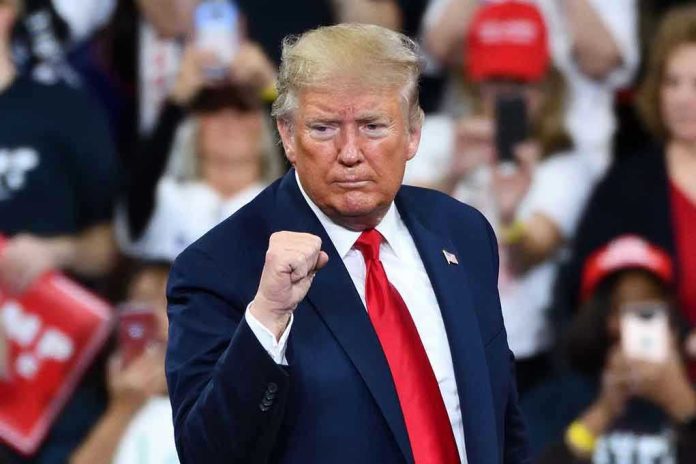
President Trump’s vow to nullify executive orders signed by an autopen under Biden’s watch has ignited fierce debate over constitutional integrity.
Story Highlights
- The House Oversight Committee report reveals alleged misuse of autopen for signing executive actions during Biden’s presidency.
- Trump administration plans to review and potentially nullify executive orders signed without direct authorization.
- Key Biden aides invoked the Fifth Amendment during the investigation, limiting available testimony.
- The controversy raises fundamental constitutional questions about presidential authority and capacity.
Biden Administration’s Autopen Controversy Unfolds
The use of an autopen to sign executive orders during President Biden’s tenure has become a focal point of constitutional debate. The House Oversight Committee, led by Chairman James Comer, released a report in October 2025 alleging that Biden’s advisors used the device to sign orders without the president’s direct authorization. This has raised significant questions about the legitimacy of these actions, with implications for the validity of numerous policies enacted during Biden’s time in office.
The investigation points to a systematic effort by Biden’s inner circle to conceal the president’s cognitive decline. This revelation has sparked outrage among conservatives who view these actions as an erosion of constitutional principles. As public discourse intensifies, the Trump administration has vowed to address these concerns by reviewing and potentially nullifying actions deemed unconstitutional.
Trump Administration’s Response and Strategy
President Trump has taken decisive steps to address the autopen controversy. As of June 2025, directives were issued to reassess presidential actions taken during Biden’s presidency, citing potential abuse of the autopen as a central concern. The Trump administration has underscored the importance of constitutional integrity, arguing that executive orders signed without direct presidential authorization undermine the executive branch’s legitimacy.
In a move that reinforces his administration’s commitment to constitutional principles, President Trump has expressed intentions to nullify orders signed by the autopen. This decision is seen as crucial to restoring transparency and accountability in the executive branch, aligning with conservative values that prioritize limited government and individual liberty.
Constitutional and Political Implications
The autopen controversy has far-reaching implications for the United States’ constitutional framework. The allegations of unauthorized executive actions raise fundamental questions about presidential capacity and the mechanisms in place to address potential incapacity. The investigation highlights the need for clearer guidelines and oversight concerning the use of mechanical signature devices in executing presidential duties.
Moreover, the controversy has intensified political polarization, with Republicans emphasizing accountability and constitutional adherence. This case may set a precedent for future administrations, potentially prompting legislative reforms to strengthen oversight of presidential health and decision-making processes.
The ongoing investigation and its outcomes will likely influence public perception of executive authority and the balance of power between the presidency and Congress. As the Trump administration continues its review, the nation watches closely, awaiting the potential ramifications on federal regulatory authority and the broader political landscape.
Sources:
House Oversight Committee Releases Report on the Biden Autopen Presidency
White House Directive on Reviewing Certain Presidential Actions
The Biden Autopen Presidency Report
Legal Experts Analyze President Biden’s Autopen Orders