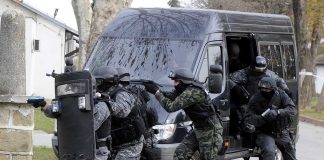

Following a tragic shooting near the White House, the potential pairing of DC police with National Guard troops raises questions about the future of law enforcement in the nation’s capital.
Story Highlights
- The shooting incident near the White House leaves one National Guard member dead, prompting security reassessment.
- D.C. Metropolitan Police consider joint patrols with National Guard, a historic shift in operational strategy.
- The proposal marks the first instance of National Guard active law enforcement in D.C.
- President Trump requests additional National Guard deployment amid rising crime concerns.
Security Concerns Trigger Operational Reevaluation
On November 26, 2025, a fatal shooting near the White House claimed the life of National Guard Specialist Sarah Beckstrom, 20, and left Staff Sergeant Andrew Wolfe, 24, critically injured.
This tragic event has prompted the D.C. Metropolitan Police Department to consider a significant shift in their operational strategies. For the first time, National Guard troops may actively patrol alongside police officers, marking a historic departure from their previous support role.
The proposal for joint patrols, although still under discussion, comes as a response to growing security concerns in Washington, D.C. President Trump declared a crime emergency on August 11, 2025, leading to the initial National Guard deployment. The Guard’s mission, previously focused on providing visible deterrence and community support, now faces a potential expansion into direct law enforcement roles.
Implications for Law Enforcement and Public Safety
The proposed joint patrols would fundamentally change the landscape of law enforcement in D.C. Guard members, traditionally limited to support roles, would transition to active policing. This shift could enhance response capabilities, particularly in high-risk areas near federal properties and transit hubs. However, it also raises concerns about the militarization of civilian law enforcement and the potential erosion of public trust.
President Trump’s request for an additional 500 National Guard troops underscores the administration’s commitment to combating crime in the capital. Yet, this expansion requires careful consideration of legal constraints, such as the Posse Comitatus Act, which generally restricts military involvement in domestic law enforcement.
Community and Political Reactions
The potential for joint patrols has sparked mixed reactions among D.C. residents and political leaders. While some view the increased National Guard presence as a necessary step to ensure safety, others express concerns about federal overreach and the impact on local autonomy. The proposal’s permanence remains uncertain, with discussions ongoing among law enforcement agencies and government officials.
Governor Patrick Morrisey of West Virginia, whose state contributes significantly to the Guard deployment, has yet to commit additional troops, emphasizing a measured approach to the evolving situation. As the debate continues, the proposal’s implications for public safety, community trust, and federal-state dynamics remain under scrutiny.
Sources:
DC Police May Pair Up with National Guard Members After Shooting Near White House
DC National Guard Activated to Support Law Enforcement in District of Columbia
2 National Guard Members Shot Near White House
Governor Patrick Morrisey: No West Virginia National Guard Troops D.C. Asked to Leave Since Shooting