

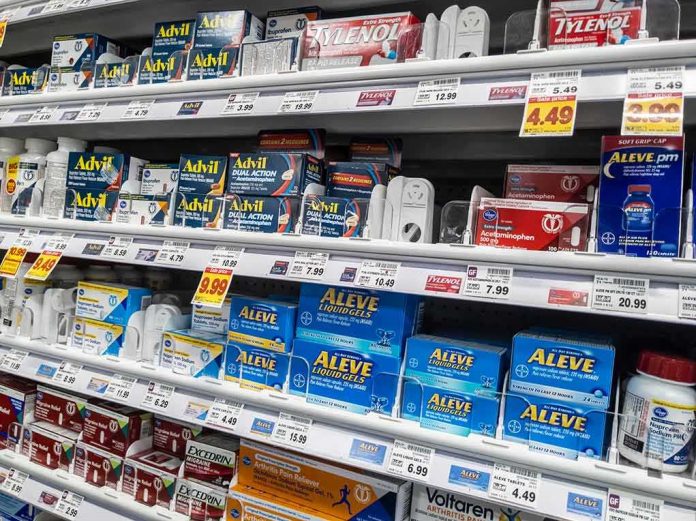
Thousands land in emergency care each year after misuse of everyday painkillers like ibuprofen, a risk hiding in plain sight for busy families and older adults alike.
Story Snapshot
- Health services warn that too much ibuprofen can cause stomach bleeding and other harms.
- Poison and safety data link ibuprofen exposures to thousands of hospitalizations over study periods.
- Labels and public posters cap adult ibuprofen at 2,400 milligrams per day unless a doctor directs otherwise.
- Most overdoses are mild, but severe cases do occur, especially at very high doses or with other drugs.
What Clinicians Say About Ibuprofen Risks
National health guidance says taking too much ibuprofen can be dangerous and needs medical advice. United Kingdom National Health Service pages warn about overdose symptoms and the need to contact urgent care if you exceed the package dose or feel unwell after an extra dose. Patient leaflets advise calling a doctor or going to a hospital if an accidental overdose occurs, noting signs like stomach pain, vomiting, or blood in vomit that can point to bleeding. These are not edge cases; they are standard safety instructions.
Public health posters set clear upper limits to cut risk. One national dosing guide states adults should not exceed 2,400 milligrams of ibuprofen in twenty-four hours unless told by a clinician. That limit matters because people often “stack” products without realizing a cold remedy or combined pill may also contain a pain reliever. When labels are tight and lives are hectic, mistakes happen. Clear dose rules give patients and caregivers a bright line to avoid harm.
What The Data Shows On Hospital Visits
Regulatory reviews of poison center reports show real, serious outcomes from ibuprofen exposures. A United States Food and Drug Administration medical review counted 76,751 ibuprofen exposure cases in one period, including 8,926 hospitalizations and 23 deaths recorded in the dataset, many tied to intentional overdoses. That is not a measure of everyday use. It does show that when doses go far above safe ranges, or when people mix drugs, the results can be severe and sometimes deadly.
Toxicology references help explain the range of outcomes. Most ibuprofen overdoses cause mild or no symptoms and can be observed for several hours, according to clinical reviews. But children who ingest very high weight-based doses face higher risk and often need hospital care. Severe toxicity can include seizures, kidney problems, and dangerous acid levels in the blood at very high doses. This split view is key: average use is safe for many, but outlier events still send patients to the hospital.
Why This Keeps Happening With “Everyday” Drugs
Ibuprofen sits in the larger group of over-the-counter pain relievers that feel familiar and safe. That comfort can dull caution. People double-dose after missing a pill, chase pain with extra tablets, or combine products that each seem small on their own. Package inserts are long and easy to skip. Healthcare systems ask patients to self-manage more care at home. All of this raises the odds of errors, even among careful people, which shows up in poison center and emergency department data.
This gap hits home for seniors on many medicines and for parents caring for kids. Older adults face higher risk of stomach bleeding and kidney strain. Parents juggle child weight-based dosing and different forms like liquids and chewables. Clear dose tools help, but not everyone sees a pharmacist before buying a bottle. When systems are stretched and advice is hard to reach, small mistakes can turn into a hospital trip. That feels like yet another way the system leaves families on their own.
Practical Steps To Cut Risk Right Now
Doctors and health services point to simple moves that work. Read the active ingredient on every product before combining it. Set a phone timer for the next dose, and keep a simple log. Do not exceed 2,400 milligrams in a day unless a clinician told you to do so. Seek urgent care if you see black stool or blood in vomit, have chest pain, trouble breathing, or an abnormal heartbeat after taking too much ibuprofen or a combined ibuprofen and codeine product.
Families facing pain and stress also face temptation to dose more. If you or someone you love uses pills to cope with pain, anxiety, or despair, ask for help. A national helpline offers free, confidential support and referrals every day and night. The line connects people to treatment for mental health and substance use issues and can guide next steps when life feels overwhelming. You are not alone, and asking early can prevent real harm.
Sources:
mirror.co.uk, nhs.uk, assets.publishing.service.gov.uk, clearchemist.co.uk, express.co.uk, ncbi.nlm.nih.gov