
The most important question is not whether a man died in Nigeria, but whether the story being sold to the public is fully proven.
Quick Take
- Trump said U.S. and Nigerian forces killed Abu-Bilal al-Minuki, whom he described as ISIS’s global second-in-command [1]
- Nigerian military reporting also says al-Minuki died in a coordinated operation in Metele, Borno State
- The claim carries real counterterrorism weight, but the public record still leans heavily on official narration [1][4]
- The bigger issue is verification: rank, identity, and strategic impact remain harder to prove than the headline suggests [4]
What Trump Said and Why It Landed So Hard
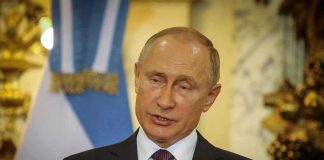
President Donald Trump said late Friday that American and Nigerian forces carried out a “meticulously planned and very complex” mission that killed Abu-Bilal al-Minuki, whom he called ISIS’s second-in-command globally [1]. That framing does two things at once. It projects strength, and it asks the public to treat the outcome as settled before the evidence is fully visible. For conservatives, the instinctive reaction is simple: if the enemy was truly killed, good. But common sense says a victory claim still needs hard confirmation.
The announcement also fit a familiar pattern in counterterrorism politics. A president speaks first, supporters repeat the win, and cable and video outlets amplify the message before the public can see full forensic detail [1][2][4]. That does not make the claim false. It does, however, mean the narrative arrives wrapped in certainty. When the target is described as a global ISIS leader, the stakes rise immediately. The burden of proof rises too, and that is where the public record starts to thin out.
What the Nigerian Side Says About the Strike
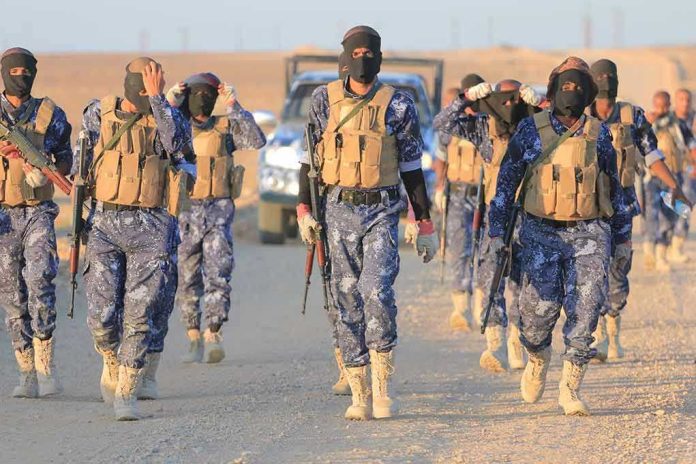
Nigerian military reporting gives the story more shape. Operation Hadin Kai reportedly confirmed the death of Abu-Bilal al-Minuki during a coordinated offensive in Metele, Borno State, beginning around 12:01 a.m. and ending around 4:00 a.m. . That account matters because it places the event in a real battlefield context, not just a political statement. It also suggests a joint action with precision air strikes, ground troops, and special forces working to block escape routes .
That level of detail strengthens the case that something significant happened. It does not, by itself, prove every part of the headline. The public still has no full casualty list, no released biometric confirmation, and no visible chain of custody for identity verification [4]. In other words, the strike may be real while some of the most dramatic labels remain less certain. That distinction matters. Killing a senior extremist is one thing. Proving the exact rank of the person killed is another.
Why the Rank Claim Deserves Skepticism
The claim that al-Minuki was ISIS’s “second-in-command globally” is powerful, but the provided reporting mostly repeats that label rather than demonstrates it [1][2][4]. One report says he had been designated a specially designated global terrorist in 2023, which supports his significance as a known extremist figure [4]. Another says he had additional aliases, which helps connect him to prior intelligence records . Still, designation and alias reporting are not the same as a public organizational chart.
That gap is where sober readers should slow down. Long War Journal notes that a United Nations-linked monitoring report identified al-Minuki as head of ISIS’s Al Furqan office, not as the group’s global deputy . That does not disprove the kill claim. It does raise a fair question about hierarchy. If officials want the public to accept “number two globally,” they need more than repetition. They need documentation that can survive scrutiny beyond a podium statement.
What This Means for the Fight Against ISIS
The operational significance is real even if the public evidence is incomplete. A senior ISIS figure killed in a joint U.S.-Nigeria action would matter because it signals reach, coordination, and pressure on a network that thrives in remote, unstable terrain [1]. President Trump and the reporting around the strike describe intelligence sources tracking the target beforehand, which suggests a planned hunt rather than a lucky hit [1][4]. That is the kind of pressure terrorist groups hate, and decent governments should welcome it.
💥 BREAKING: AFRICOM confirms airstrike kills Abu-Bilal al-Minuki, ISIS deputy in Nigeria. Major blow to terror network, but retaliation fears loom. Oil & security risks in focus. pic.twitter.com/ikzbC5qSL7
— Dino breaking news (@DinoLeadingNews) May 16, 2026
Still, Americans should resist the temptation to confuse announcement with proof. Conservative instincts favor results, but they also favor accountability, clear chains of command, and skepticism toward inflated claims. If the kill is confirmed, the administration deserves credit. If the rank was overstated or the identity remains uncertain, that should be corrected too. The truth in counterterrorism is often more useful than the slogan. Right now, the headline is strong. The documentation is not yet as strong as the language being used to sell it.
Sources:
[1] YouTube – US President Trump Announces ISIS Deputy Abu-Bilal al …
[2] YouTube – Top ISIS Commander, Abu-Bilal Al-minuki Killed In U.S-Nigeria Joint …
[4] Web – Trump says ‘most active terrorist in the world’ killed by US and …