

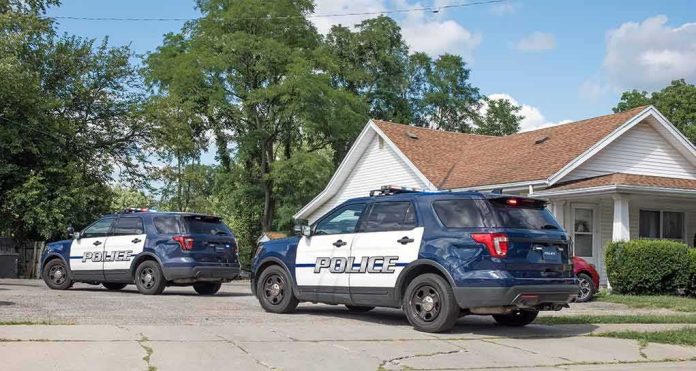
Apple AirTags hidden inside stolen Republican campaign signs in Georgia led police straight to the home of a retired college professor and his pastor wife, according to bodycam footage and local reporting.
Story Snapshot
- Tracking devices placed inside missing signs for Georgia House candidate Stephen Acorn reportedly led officers to the home of Spencer Garrard and his wife, Cindy Cox Garrard.
- Police bodycam video shows officers questioning the resident and recovering signs from the trash at the property.
- Cindy Cox Garrard says she removed the signs herself because she believed they were illegally placed on public right-of-way, not stolen from private property.
- Four campaign signs were returned to Acorn, and no formal charges have been confirmed in the available records.
Tracking Devices Point Police to a Quiet Home
Stephen Acorn, a Republican running for the Georgia House, says he got an alert within 24 hours that two of his campaign signs were moving. He had placed Apple AirTags inside them after earlier signs disappeared. The trackers reportedly led Acorn and police straight to a house tied to a retired Columbus State University professor and his wife, a local pastor.
Taking a campaign sign without permission is treated as theft under Georgia law, a misdemeanor offense. Officers arrived at the home to investigate, and police reportedly warned that charges could still be filed depending on how the case moves forward.
BUSTED:🚨RETIRED PROFESSOR QUESTIONED AFTER STOLEN CAMPAIGN SIGNS TRACED TO HIS HOME
Police were called after stolen campaign signs belonging to Georgia House candidate Stephen Acorn were reportedly traced to the home of retired Columbus State University Professor Spencer… pic.twitter.com/6G7xUo36tK
— Sergeant News Network (@sgtnewsnetwork) September 8, 2026
Bodycam Footage Captures the Confrontation
Body camera video circulating online shows officers questioning the resident about the signs and then digging four of them out of the trash. The footage, first surfaced by conservative commentary outlets, shows the signs being pulled out and returned to Acorn’s campaign. No official police report, case number, or charging document has surfaced publicly to confirm exactly how prosecutors plan to handle the matter.
Wife Claims Signs Were Illegally Placed
Cindy Cox Garrard later spoke up to take responsibility herself, saying her husband had nothing to do with it. “I thought the signs were illegally placed on public right of way and removed them,” she said, adding that “the signs have been returned”. In a separate public post, she wrote, “They” is me, not my husband. I never removed a sign from private property”.
Her defense raises a real legal question. Georgia and most states treat signs on private property differently than signs stuck along a public roadside. Removing a sign from someone’s yard is usually theft. Removing one from a public right-of-way, where local rules often ban political signs entirely, can be legal for a property owner or resident nearby. That distinction has not been resolved in any court record found so far.
A Pattern Playing Out Across the Country
This is not an isolated case. Voters from Missouri to Tennessee to Wisconsin have used AirTags and home cameras to catch people removing campaign signs, and police departments regularly remind residents that stealing a lawfully placed sign is a crime in all 50 states. A Reuters report found roughly one in ten Americans display a presidential yard sign, which helps explain why these cheap, visible objects trigger outsized political fights.
Sign theft cases nationwide have led to real consequences before. In Tennessee, one commission candidate was formally charged after an AirTag traced stolen signs back to him, with a court affidavit listing exact restitution costs. Whether the Georgia case follows a similar path toward charges, or ends with no prosecution because of the right-of-way question, remains unresolved.
Unanswered Questions Remain
The available reporting leans heavily on conservative commentary sites and social media reposts rather than a police department statement, court filing, or neutral local outlet with full documentation. No public records confirm an arrest, a formal charge, or a prosecutor’s decision. The case highlights how quickly a local property dispute, amplified by tracking technology and partisan social media accounts, can turn into a national flashpoint before official records catch up.
Sources:
twitchy.com, thegatewaypundit.com