The same virus that once felt like “just a bad flu” is now quietly linked to brain changes that can steal your focus, scramble your memory, and—if you ignore the warning signs—age your brain years ahead of schedule.
Story Snapshot
- COVID-19 is now firmly tied to lasting brain fog and measurable brain damage in some survivors, especially older adults.
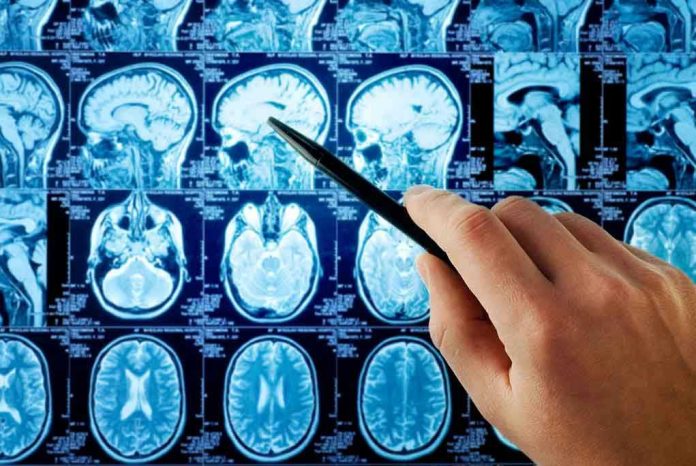
- Scans reveal brain shrinkage, grey matter loss, microbleeds, and structural changes even after so-called “mild” infections.
- Rare inflammatory brain conditions and Alzheimer’s-like protein changes raise questions about long-term dementia risk.
- Daily choices—sleep, exercise, diet, and mental training—can either accelerate this damage or help your brain fight back.
COVID-19 Is No Longer Just A Lung Disease Story
Doctors who first met COVID-19 in crowded emergency rooms thought they were treating a respiratory virus. Then came the patients who could not remember simple words, lost track of conversations, or felt like their thoughts were moving through wet cement. Many called it “brain fog.” Rigorous studies now show that between one-fifth and one-third of COVID survivors report lingering cognitive problems, from trouble focusing to mood changes, months after infection.[1][2][4] This is not about being “tired after a cold”; it looks a lot more like subtle brain injury.
Neurologists describe COVID’s impact on the brain as a “second pandemic.” Brain imaging has revealed microhemorrhages—tiny bleeds—in critical regions that govern memory and attention, along with lesions that can disturb motor function and balance.[1] These microbleeds are not just curiosities on a scan. Researchers warn they can accelerate brain aging and set the stage for irreversible neurodegenerative conditions, including forms of dementia, in susceptible people.[1] For older adults already on the edge, that added shove can matter more than any stock-market swing.
What The Scans And Autopsies Are Quietly Showing
Large-scale imaging projects have created a before-and-after picture of the COVID brain that is hard to dismiss. A United Kingdom study followed hundreds of people who had brain scans both before and after catching COVID-19, and compared them with similar individuals who never tested positive.[3][4] Those infected showed decreased brain size, loss of grey matter, and signs of tissue damage; the uninfected did not. Many had never been hospitalized, meaning mild illness still left fingerprints in their brain structure.[4]
Other teams have zeroed in on specific regions like the basal ganglia and thalamus—deep structures that help regulate movement, motivation, and alertness. In patients with Long COVID, changes in these areas correlate with fatigue, daytime sleepiness, and short-term memory problems that interfere with ordinary life.[3] Autopsy work has revealed strokes, oxygen-starved tissue, and in some cases large immune cells clogging tiny brain capillaries, offering a grim anatomical explanation for cognitive symptoms.[2] These are not vague, psychosomatic complaints; they line up with physical changes you can see under a microscope.
How COVID Attacks Your Brain From Multiple Angles
Doctors now trace several converging paths by which COVID can damage the brain. In some patients, the virus directly invades the central nervous system, causing encephalitis—swelling of brain tissue—with consequences ranging from seizures to subtle personality change.[2][4] In others, an overactive immune response unleashes a storm of inflammatory molecules that make blood more likely to clot, pushing patients toward strokes and tiny, widespread blockages in delicate brain vessels.[2][4] When clots or inflamed vessels choke off oxygen, brain cells begin dying within minutes.
On top of that, COVID can ravage lungs and heart, quietly starving the brain of oxygen for hours or days.[4] Long after the fever breaks, persistent low-grade inflammation may keep brain immune cells on high alert, degrading wiring and connections that support memory and clear thinking.[3][4] Some research now suggests COVID infection can drive a buildup of Alzheimer’s-related proteins, such as beta amyloid, raising the uncomfortable possibility that today’s brain fog in middle age could become tomorrow’s dementia diagnosis.[6] The evidence is still emerging, but the direction of travel is not comforting.
Rare Brain Inflammations Raise Hard Questions, Not Certainties
Beyond the common fog and fatigue, a few rare but dramatic brain conditions have appeared in the medical literature after COVID exposure—both after infection and after vaccination. Doctors have reported cases of cerebral amyloid angiopathy-related inflammation, where blood vessels already laced with amyloid protein suddenly become inflamed, causing swelling, seizures, and hemorrhage.[1][3] Others describe amyloid beta-related angiitis, a cousin condition confirmed by brain biopsy, that emerged within weeks of vaccination and improved with steroid treatment.[2]
About 15% of strokes are hemorrhagic. Hypertension is the leading cause, period.
In older patients, cerebral amyloid angiopathy is likely the second most common. It’s closely related to Alzheimer’s disease. Here, amyloid plaque deposits in the vessel wall weaken it, leading to… pic.twitter.com/Hr1XTuytER
— Whitfield Lewis, MD 🇦🇬🇺🇸 (@whitfieldlewis6) May 19, 2026
These cases are medically real but statistically tiny. Authors stress that timing alone does not prove that infection or vaccination caused the inflammation.[1][2][3] At the same time, the fact that these syndromes respond to powerful immune-suppressing drugs underlines an important point: for a small number of people, COVID-era immune activation appears able to tip the brain’s blood vessels into dangerous territory. Common sense and conservative thinking both argue for sober curiosity here, not denial or panic. The right response is better research, not censorship.
What You Can Do Now To Protect And Repair Your Brain
Most people with post-COVID brain fog do not go on to suffer catastrophic brain disease. Neurologists report that the vast majority improve substantially or recover fully within six to nine months, provided they support their brain’s healing processes.[5] That support starts with basics many Americans neglect: quitting tobacco, reining in alcohol, and moving the body daily. Even a 20-minute walk improves blood flow, reduces inflammation, and helps the brain clear out metabolic waste.[5] These habits will pay dividends whether your fog came from COVID, age, or plain burnout.
Food and sleep choices matter as much as any prescription. Processed foods, sugary drinks, and constant late nights amplify inflammation and undercut brain repair.[5] A diet rich in real vegetables, adequate protein, and healthy fats, combined with steady sleep routines, gives recovering neurons the raw materials they need. Some clinicians recommend moderate vitamin D supplementation to support nerve function, especially in older adults with low levels.[5] Just as crucial is mental exercise: puzzles, reading, learning new skills, card games, even demanding hobbies. Neurons wire and rewire based on demand; idle circuits decay.
When To Worry, When To Act, And Why Denial Is Not A Plan
Persistent brain fog, new memory lapses, or difficulty handling tasks you once managed easily after COVID should not be brushed off as “getting older.” If symptoms markedly limit your work, driving, or relationships—or if they persist beyond six months—doctors recommend a formal evaluation and, in some cases, referral to a neurologist.[4][5] The goal is not to catastrophize, but to rule out more serious problems, tailor rehabilitation, and document changes while they are still modest enough to respond to intervention.
Society will spend years arguing over policies, vaccines, and blame, while publication bias and institutional spin muddy the waters. Those debates will not protect your brain. What will help is recognizing that COVID can touch the organ that makes you you, sometimes in ways that do not fully heal on their own. Take lingering symptoms seriously, push for transparent research, and, meanwhile, live in a way that gives your brain every possible advantage. Politicians can haggle over narratives; you have to protect your mind.
Sources:
[1] Web – Cerebral amyloid angiopathy – Related inflammation after COVID …
[2] Web – Amyloid β-related angiitis of the central nervous system occurring …
[3] Web – A case of cerebral amyloid angiopathy related inflammation after …
[4] YouTube – Factors affecting the efficacy of COVID-19 vaccination in patients …
[5] Web – AMYLOID POST COVID-19 VACCINE – ANY RELATION?
[6] Web – Study Finds COVID-19 Can Cause Build-up of Alzheimer’s-Related …