
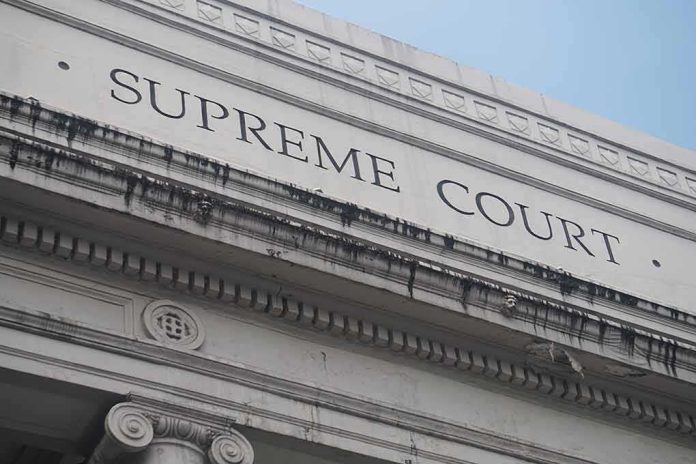
Chief Justice John Roberts on Thursday, October 8, froze a lower-court order, so political parties can keep buying TV ads at the cheap rates the law sets aside for candidates as the Nov. 3 election nears.
Story Highlights
- Roberts issued an administrative stay, a short pause that keeps things as they are while the Supreme Court looks at an emergency request.
- The pause blocks an appeals court order that gave the FCC until noon Friday, October 9, to rule on a Democratic challenge.
- For now, party committees and joint fundraising groups can still get the “lowest unit charge,” the discount ad rate stations must give candidates.
- Republicans pushed for the rule because of their big cash edge at the party level; Democratic candidates sued to kill it.
- The Democratic challengers have until 5 p.m. Eastern on Saturday, October 10, to respond.
What The Order Does And Who Wins
The stay keeps a rule from the Federal Communications Commission (FCC), the federal agency that oversees broadcast TV and radio, in place for now. Under that rule, party committees pay the same low ad price as candidates. Republicans pushed for it because they hold a large cash advantage at the party level, according to reports. Democratic candidates, whose edge is in their own campaign accounts, sued to strike it down. With the stay in place, stations must keep offering the cheap rate to qualifying party buyers in the final weeks of the campaign.
The order came hours after Solicitor General D. John Sauer, the lawyer who argues the federal government’s cases at the Supreme Court, filed an emergency request on Thursday. A day earlier, on Wednesday, October 7, a divided panel of the U.S. Court of Appeals for the Fourth Circuit had ordered the FCC to decide the Democratic challenge by noon Friday. Sauer called that deadline “grossly unreasonable” and the order a “flagrant abuse.” Roberts, who handles emergency requests from the Fourth Circuit, paused the order “pending further order of the undersigned or of the Court.”
What The Discount Is
Federal law gives candidates for federal office a break on ad prices. In the 45 days before a primary and the 60 days before a general election, stations must sell them airtime at the “lowest unit charge.” That means the lowest price the station charges any advertiser for the same kind of spot. The 60-day window before the Nov. 3 general election is now open.
On March 30, the FCC’s Media Bureau, the staff office that handles TV and radio rules, issued a notice saying political parties and joint fundraising committees should get that same low rate. A joint fundraising committee is a group that raises money together for candidates and party committees. The notice was set to take effect September 4.
The Democratic Challenge
On April 29, Sen. Jon Ossoff of Georgia and three other Democratic House and Senate candidates asked the full FCC to review the notice. About six weeks later, with no answer from the agency, they sued in federal court. They argue Congress gave the low rate only to candidates, not to parties.
A divided Fourth Circuit panel agreed in August. Judge Robert King, writing for the majority, said the laws “are clear that neither political parties nor joint fundraising committees with non-candidate members can be entitled to the LUC,” meaning the lowest unit charge.
The Earlier Supreme Court Ruling
The Republican Party’s Senate and House campaign committees joined the case and went to the Supreme Court in late August. On September 4, the justices paused the Fourth Circuit’s ruling in a short unsigned opinion. They said the Republican groups were likely to win because the appeals court acted while the candidates’ request was still pending at the FCC. Justice Ketanji Brown Jackson dissented.
The Fourth Circuit then set its Friday deadline to force a decision from the FCC. Sauer accused the appeals court of trying to short-circuit the commission’s work. The Republican committees filed their own emergency request Thursday morning. They warned that, without a stay, stations would pull the cheap rates in the final weeks before the midterms.
What Each Side Says
Republicans say the guidance treats all parties fairly. Democrats say the cheap rates were meant for individual candidates only. FCC Commissioner Anna Gomez, a Democrat on the commission, warned that the decision could bring a surge of cheap party ads paid for by wealthy donors and cause chaos in the last weeks of the midterms, according to reports.
What Comes Next
The Democratic challengers have until 5 p.m. Eastern on Saturday, October 10, to file their answer. After that, Roberts or the full Court will decide whether to keep the pause in place while the case goes on. The stay does not settle who is right on the law. The Court’s next step will decide how the last weeks of TV ads before Nov. 3 are priced.
Sources:
nytimes.com, sherafy.com, thehill.com, ground.news, scotusblog.com