

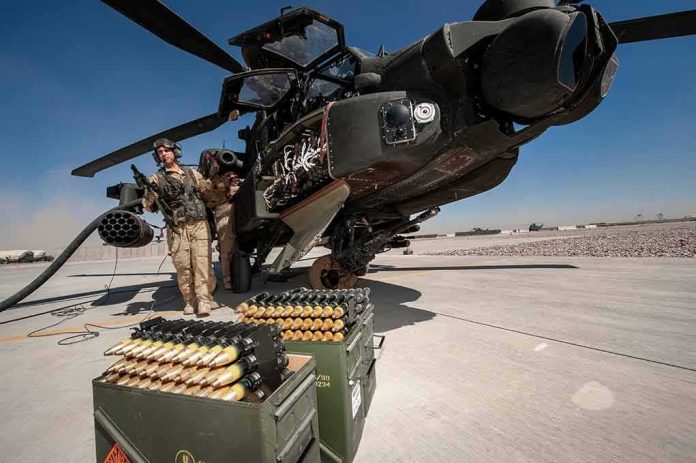
The photos came from the people who live on the bases. Active-duty service members handed CBS News images of flattened barracks, burned vehicles and holed aircraft at U.S. positions across the Middle East, on condition their names stay out of it. “This is major damage to our bases that hasn’t been communicated to the American public,” one of them said. On September 15 the Pentagon’s own Inspector General backed them up with a report that puts numbers on what U.S. Central Command described in February as “minimal” damage.
Where This Stands Right Now
- The Inspector General says Iranian strikes “damaged or destroyed hundreds of buildings and structures” at U.S. bases in Kuwait, Bahrain, Qatar, the UAE, Saudi Arabia, Iraq, Oman and Jordan, and that “dozens of U.S. aircraft” were damaged or destroyed.
- Casualties from February 28 through June 30: 7 service members killed in action, 417 wounded, 7 more dead in non-hostile incidents.
- Cost through June 29: about $33.4 billion, including $22.3 billion in munitions expended and $3.7 billion in equipment losses. The report flags “shortages of strategic munitions” and bottlenecks in the defense industrial base.
- CBS’s photos, supplied by troops, show heavily damaged buildings and barracks behind concrete T-walls at Prince Sultan Air Base in Saudi Arabia, among other sites.
What The Troops Sent
The images are the kind that do not get released through public affairs: barracks with the walls gone, vehicles burned to the frame, an aircraft hangar with daylight coming through the roof. Military rules bar service members from sharing them, which is why CBS granted anonymity. The Washington Post separately mapped at least 228 damaged structures or pieces of equipment at U.S. sites using satellite imagery; the BBC counted 20 damaged sites across eight countries; and Reuters confirmed in September that an A-10 lost a wing and about eight F-15s took lighter damage at Muwaffaq Salti Air Base in Jordan. The service members’ photos match the overhead picture from the ground.
What The Pentagon Said At The Time
After the first waves of Iranian retaliation in late February, CENTCOM told the public there were no U.S. casualties, that damage was minimal, and that operations were unaffected. Some of that was true on the night it was said; battle-damage assessments take time, and early statements are written to reassure allies and deny Tehran a propaganda win. But the Inspector General’s tally covers four months, and across four months the damage was not minimal. It was hundreds of structures, dozens of aircraft, and a munitions stockpile drawn down far enough that the report calls it a strategic shortfall.
Why Conservatives Should Want This Out
This is not a story that helps the war’s critics; it is a story that helps the people fighting it. The troops who leaked the photos did not do it to embarrass the administration. They did it because the barracks in the pictures are theirs, the replacement aircraft are not coming fast enough, and the industrial base that is supposed to refill the magazines is, by the Pentagon’s own account, bottlenecked. A $33 billion bill and 417 wounded are the argument for the defense budget the White House has been asking for. Hiding the damage behind “minimal” only makes that argument harder to win in Congress.
What Happens Next
Watch for the classified annexes of the IG report to reach the Armed Services committees, which will have the base-by-base figures the public version rounds off. Watch the munitions line in the next supplemental, which is where the “strategic shortfall” language turns into dollars. And watch whether the Pentagon disciplines the service members who sent the photos, or quietly decides that the public was owed them.
Sources:
cbsnews.com, washingtonpost.com, bbc.com, reuters.com