
President Trump suspended out-of-quota tariffs on up to 300,000 metric tons of ground beef for 90 days, with a pledged 25% retail discount to ease grocery costs.
Story Snapshot
- Trump opened a 90-day window for tariff-free ground beef imports up to 300,000 metric tons.
- The White House says the imported beef will be sold 25% below current market prices.
- The move targets high beef prices tied to a historically small U.S. cattle herd.
- Under normal rules, out-of-quota beef faces a 26.4% tariff; this deal waives it.
What Trump Announced and Why It Matters
President Trump said the United States will let up to 300,000 metric tons of ground-beef product enter without out-of-quota tariffs for 90 days. The administration framed the action as fast relief for shoppers facing high meat prices. Trump added that there is a commitment to sell this beef at 25% below current market prices. The White House presented the step as a bridge while ranchers rebuild herds and as a way to push down grocery bills now.
BREAKING: President Trump announces a deal to sell 300,000 pounds of beef at a 25% discount to market price as beef prices hit a record high. pic.twitter.com/QTX5h0AXe3
— 🦋 Laraib Fatima 🦋 (@Laraib_Fatiima) August 21, 2026
Reuters reported the import allowance will not count against the usual tariff-rate quota ceilings. That structure normally charges a low tariff for in-quota imports and a much higher tariff above the cap. By carving out this temporary lane, the administration expects more supply to flow at lower cost. The plan runs for 90 days, so its impact will be near-term. The announcement came as food costs remain a top concern for many households.
How Tariffs and Quotas Shape Ground Beef Prices
The United States uses tariff-rate quotas for beef. Imports inside the quota face a small duty. Imports above that quota face a steep tariff, which raises costs and can limit supply. The United States Department of Agriculture and trade data show the over-quota tariff is roughly 26.4%. Waiving that charge for a set amount can make imported lean trimmings cheaper, which are key inputs for ground beef. Lower input costs can filter to retail prices if competition passes savings along.
Earlier this year, the administration also expanded in-quota access for certain beef products to ease pressure on ground beef. That step aimed to boost lean trimming supplies used to blend with fattier domestic cuts. Officials said the goal was to keep burger meat affordable during a tight cattle cycle. The current 90-day action builds on that approach by focusing on out-of-quota costs that normally block extra pounds from entering the market at a low price.
The Price Problem: A Shrinking Herd and Rising Costs
Government data show beef and veal prices rose about 11.8% year over year in June 2026. Analysts tie those gains to the smallest U.S. cattle herd in roughly 75 years. Drought, high feed costs, and prior culling have reduced supplies. When cattle numbers fall, beef production tightens and prices climb. These cycles often last many years, which makes quick fixes hard. Extra imports can help ground beef prices at the margin, but they do not rebuild the herd.
Economists describe cattle as a long biological cycle. Calving, feeding, and finishing take time. The U.S. Department of Agriculture has noted that cattle inventories and prices often move in an eight-to-twelve-year range. That backdrop explains why a 90-day import change is a short-term tool. It can add supply in weeks, not years. Still, lasting relief will likely depend on herd rebuilding, weather, feed costs, and packing capacity. Those forces set the baseline for meat prices over time.
Who Gains, Who Worries, and What to Watch Next
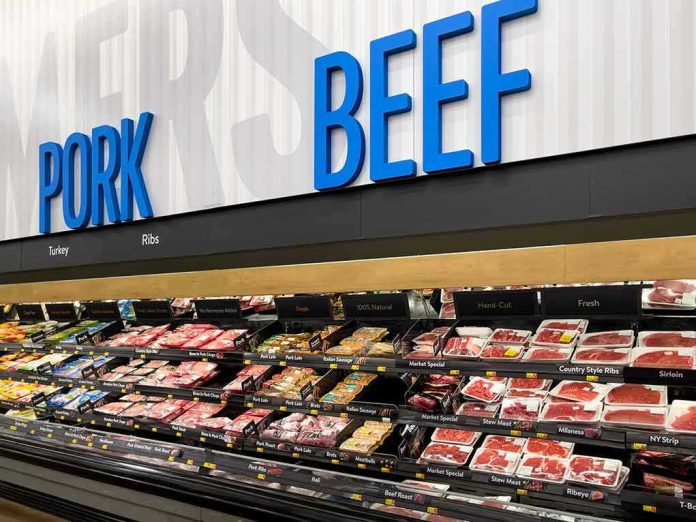
Shoppers could see cheaper ground beef if retailers and restaurants stock the discounted product and pass savings on. The administration’s stated target is a 25% price cut on these specific imported pounds. That is a clear promise tied to the deal’s terms. If the imports arrive quickly and in volume, the savings may show up in weekly ads, quick-serve menus, and wholesale lists before the 90-day window closes.
@SecRollins the price of beef, the US failing economy and rapidly increasing interest on US treasurey bonds – the dramatic rise in groceries and gas – is NOT Biden who left Trump a remarkably strong economy. YOU and the Trump Admin's fucked economic politics are solely to blame
— Dr Lou 🌻 (@bfs465) August 21, 2026
Ranchers and feeders often watch such moves closely. Some industry groups argue that imports can pressure domestic prices in the short run, while not fixing the core supply issues at home. Others note that cheaper lean trimmings can keep burger prices in check without hitting steak or roast values. The Dallas Federal Reserve has observed that lean imports mainly affect ground beef, not other cuts. That split effect may define how this policy shows up in the meat case.
Sources:
facebook.com, x.com, devdiscourse.com, kpmg.com, mla.com.au, ag.purdue.edu, fas.usda.gov, themoneyoverview.com