
British Prime Minister Keir Starmer condemned Iran’s regime as “utterly abhorrent” after the rogue nation launched attacks on commercial vessels and blockaded the Strait of Hormuz, threatening global energy supplies and proving once again that Tehran remains a destabilizing force unwilling to respect international norms.
Story Snapshot
- Starmer joined leaders from France, Germany, Italy, Netherlands, and Japan in condemning Iranian attacks on unarmed commercial vessels and energy infrastructure across the Gulf region
- Iran’s blockade of the Strait of Hormuz threatens critical international trade routes, with effects felt worldwide especially by vulnerable populations
- UK deployed RAF jets and air defense systems to protect Gulf allies while British military planners join US Central Command to reopen vital shipping lanes
- Iranian regime accused of backing more than 20 potentially lethal attacks on UK soil over the past year while brutally crushing domestic dissent
International Coalition Demands Iran Stand Down
Prime Minister Starmer issued a joint statement with leaders from six nations demanding Iran immediately cease its military aggression in the Gulf. The coordinated declaration condemned recent attacks by Iran on unarmed commercial vessels, strikes on civilian infrastructure including oil and gas installations, and the effective closure of the Strait of Hormuz by Iranian forces. The coalition called on Tehran to stop laying mines, launching drone and missile attacks, and blocking commercial shipping while complying with UN Security Council Resolution 2817 approved March 11, 2026.
MOMENTS AGO: United Kingdom Prime Minister Keir Starmer unleashes against Iran for causing "untold economic damage" in the Strait of Hormuz, as the United States begins its naval blockade on Iranian ports in the waterway.
"The freedom of navigation is vital and must be restored.… pic.twitter.com/cCH9SjmLXg
— Fox News (@FoxNews) April 13, 2026
The international statement emphasized that Iranian actions will impact all parts of the world, particularly the most vulnerable people who depend on stable energy markets and open trade routes. Defence Secretary John Healey characterized the Iranian offensive as a serious escalation that will further destabilize the region, justifying increased defensive support to Gulf allies. British forces deployed RAF jets flying defensive sorties against Iranian drones while air defense systems protect critical infrastructure in Saudi Arabia against Tehran’s indiscriminate attacks.
Energy Infrastructure Under Assault
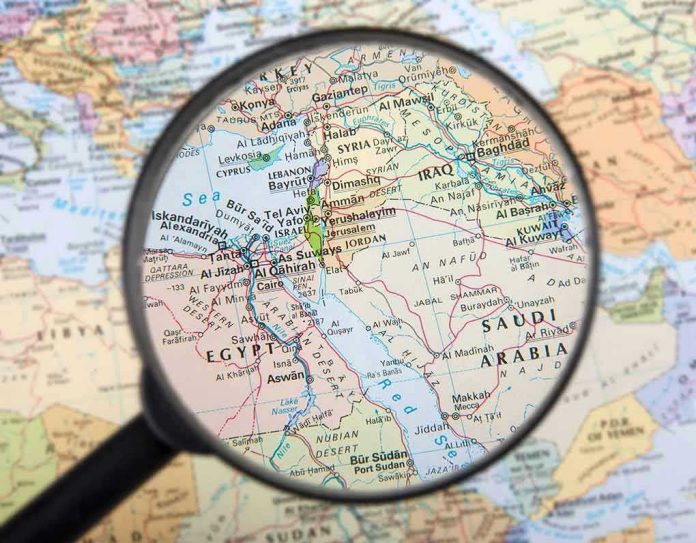
Iranian military strikes targeted multiple energy facilities across the Gulf region, hitting a Saudi oil refinery, Qatari gas installations, and two Kuwaiti oil refineries. These attacks followed an Israeli strike on Iran’s main natural gas field, triggering Tehran’s retaliatory campaign that threatens global energy supplies. The blockade of the Strait of Hormuz represents a chokepoint for international commerce, with UK military planners joining US Central Command to formulate proposals for reopening this vital shipping lane that carries significant portions of the world’s oil supply.
Starmer chaired an emergency Cobra committee meeting in response to the escalating crisis, acknowledging that prolonged conflict worsens the UK’s cost of living situation. The Prime Minister noted that disruptions to energy markets and commercial shipping create economic hardship for British citizens already struggling with inflation. This reality underscores how foreign policy failures and regional instability directly impact ordinary families at home, a concern that resonates with voters frustrated by government inability to shield them from global turmoil largely caused by rogue regimes.
Pattern of Iranian Aggression Against Britain
Starmer revealed the Iranian regime has backed more than 20 potentially lethal attacks on UK soil over the preceding year, targeting UK dissidents and the Jewish community. The Prime Minister characterized Tehran’s government as having murdered thousands of their own people while brutally crushing domestic dissent, demonstrating a pattern of lawlessness both internationally and within Iran’s borders. These revelations paint a picture of a regime that poses direct threats not only to regional stability but to British national security on home territory.
The UK government articulated three core objectives in response to Iranian aggression: protecting British people in the region, defending allies without being drawn into wider war, and working toward swift resolution bringing security and stability. Starmer emphasized the vital importance of preventing further escalation while returning to diplomatic processes that prioritize peace, security, and protection of civilian life. This balanced approach seeks to hold Iran accountable while avoiding entanglement in broader Middle Eastern conflicts that could spiral beyond control, reflecting concerns many Americans share about endless foreign interventions.
Global Consequences of Tehran’s Recklessness
The Iranian campaign against commercial shipping and energy infrastructure threatens to reshape Middle Eastern security arrangements while disrupting global commerce and economic stability. Long-term implications include increased risks of Iranian nuclear weapons development, a stated UK concern that has driven policy for years. The conflict demonstrates how regional instability created by rogue actors imposes costs on innocent populations worldwide through higher energy prices, disrupted supply chains, and economic uncertainty that governments seem powerless to prevent.
This situation reflects a familiar pattern where ordinary citizens bear the consequences of decisions made by distant elites and foreign regimes that operate outside international norms. The Iranian blockade of vital shipping lanes, attacks on civilian infrastructure, and threats to commercial vessels reveal a government willing to hold global commerce hostage to achieve its objectives. Such behavior demands firm international response, yet many citizens question whether coordinated statements and defensive deployments will ultimately prove sufficient to deter a regime that has demonstrated consistent disregard for international law and human life.
Sources:
PM statement on Iran: 28 February 2026