
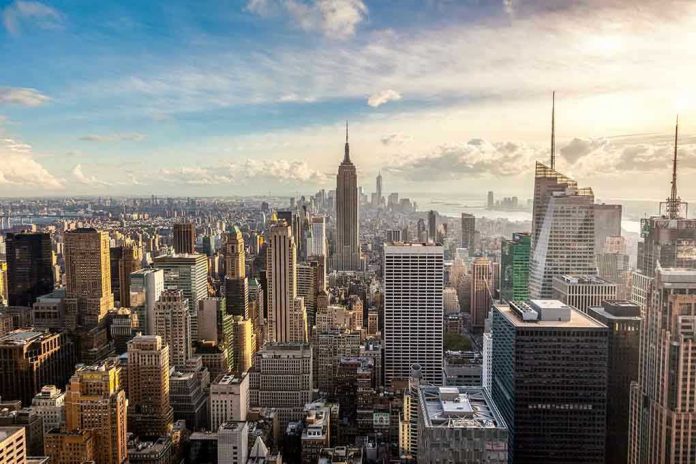
New York City’s latest viral “call to prayer at 5 a.m.” uproar is less about theology than about whether City Hall will enforce basic quality-of-life rules evenly for everyone.
Story Snapshot
- Videos and posts claim loudspeakers broadcast the Islamic call to prayer (adhan) at dawn in Manhattan and Brooklyn, waking residents days before Ramadan.
- The loudest online narrative blames a supposed new mayor, Zohran Mamdani, but the available reporting does not confirm any new citywide policy shift or official directive.
- New York City previously loosened permit requirements in 2023 under then-Mayor Eric Adams for amplified adhan tied to Friday prayers and Ramadan, within existing noise rules.
- The central unresolved question is enforcement: whether dawn-volume amplification is permitted, and if not, why residents say it is happening without a quick city response.
What’s Driving the Backlash in Manhattan and Brooklyn
Posts circulating February 15–16, 2026, show street-level videos in Manhattan and Brooklyn with speakers broadcasting the adhan around dawn, with residents complaining they were jolted awake. The viral framing alleges the call is occurring five times daily, citywide, and at high volume. The evidence in the research packet is mainly social media amplification plus one strongly opinionated article; no official city confirmation is included.
New York’s density turns any amplified sound into an unavoidable public event, especially at 5 a.m. That matters because the practical issue is not whether individuals can pray—religious liberty protects that—but whether the government is allowing one group to project audio into every nearby bedroom. When residents feel powerless to stop it, the frustration quickly shifts from “noise complaint” to “who is running this city?”
What the City Actually Changed in 2023—and What’s Still Unclear Now
New York City’s most documented policy shift occurred in 2023, when Mayor Eric Adams announced guidelines that reduced “red tape” for mosques seeking to amplify the adhan for specific occasions like Friday prayers and Ramadan, aligning NYC with other cities that had made similar moves. The reporting cited in the research describes it as a permit-process change, not a blanket authorization for all times and places.
That context is crucial because the 2026 viral narrative implies a sudden, dramatic expansion—routine dawn broadcasts across neighborhoods—yet the same research packet flags contradictions. It notes that the claim a “Mayor Zohran Mamdani” authorized a broader rollout is not verified with official statements, documents, or city guidance. With limited sourcing, the responsible conclusion is narrower: something is happening in specific locations, but the policy basis remains unconfirmed.
Religious Freedom vs. Government-Enabled Noise: Where Conservatives Draw the Line
Conservatives generally defend First Amendment free exercise while also insisting government should not pick winners and losers—or force the public to participate in someone else’s observance. Amplified sound pushed into shared public space is where that tension becomes real. If the city is effectively allowing amplification at dawn volumes in residential corridors, residents will view it as government choosing “equity theater” over basic enforcement and public order.
The research also shows how quickly online commentary escalates from local enforcement questions into sweeping cultural accusations. That leap may generate clicks, but it doesn’t resolve the constitutional balancing test New Yorkers actually live under: neutral rules applied equally. A city can protect worship while still enforcing reasonable time, place, and manner restrictions. If restrictions exist but aren’t enforced, the problem is selective government negligence, not the Constitution.
The Mayor Claim, the Viral Ecosystem, and the Missing Official Answers
The most provocative allegation—“under Mamdani’s leadership”—is repeated in social posts and echoed by a partisan outlet, but the provided research contains no direct quotes or verified city documentation tying an expanded schedule to any specific mayoral order. The only clearly grounded government action in the packet is the 2023 Adams-era change. That gap leaves New Yorkers stuck between viral certainty and official silence.
Until City Hall clarifies the current rules—what is permitted, what decibel limits apply, and how complaints are handled—the story will keep metastasizing online. A transparent response would lower tensions: confirm whether these broadcasts are authorized, identify the applicable noise standards, and show residents how enforcement works. Without that, every new clip becomes “proof” of government overreach to those already exhausted by years of elite-led social experimentation.
New Yorkers Wake to the Islamic Call to Prayer https://t.co/n2yqSjdpmZ The cojones on these people.
— The Queen's wedding shudder. (@Msblowana) February 17, 2026
For now, the facts available are modest: videos show audible adhan in at least two boroughs, and the timing appears to be early morning. Everything beyond that—frequency, citywide scope, and who ordered it—needs documentation the current narrative doesn’t provide. Conservatives watching this should keep the focus on equal application of laws, neighborhood livability, and a government that serves citizens instead of lecturing them when they object.
Sources:
https://telegrafi.com/en/New-York-allows-the-loudspeaker-call-to-prayer-during-Fridays-and-Ramadan/