

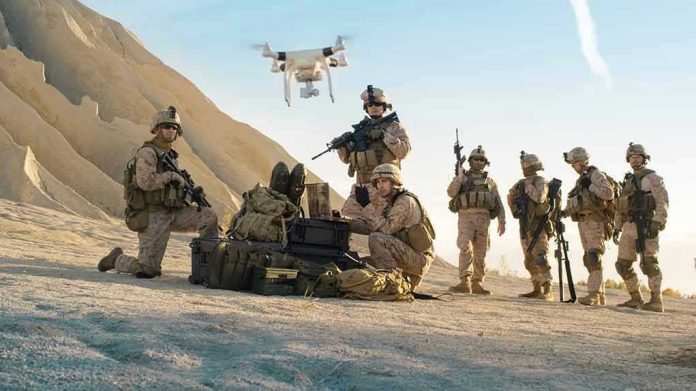
AI companies have dramatically shifted from opposing military use to partnering with the U.S. Department of Defense, marking a pivotal change in tech-industry dynamics.
Story Overview
- Leading AI companies now collaborate with the U.S. military, reversing prior stances against weaponization.
- The shift is driven by geopolitical pressures and the need for substantial capital in AI development.
- Four major AI companies secured $200 million contracts each with the DoD.
- The partnerships coincide with heightened U.S.-China AI competition.
The Shift in AI Companies’ Stance
Leading AI companies such as OpenAI, Google, Meta, and Anthropic have reversed their previous positions on military use of their technologies. They have begun partnerships with the U.S. Department of Defense and related contractors. This dramatic transition occurred over a short span from January 2024 to January 2026. The partnership reflects a departure from Silicon Valley’s traditional opposition to weaponizing AI, propelled by geopolitical tensions and economic necessities.
The change began with OpenAI lifting its ban on military applications in early 2024, followed by Meta and Google making similar policy shifts. By January 2026, the Pentagon announced contracts with these companies, each set at $200 million. This collaboration underscores the Pentagon’s strategy to leverage commercial AI technology for military advancements, highlighting a new era of tech-military alliances.
Economic and Geopolitical Drivers
The shift towards military partnerships among AI companies is not just ideological but deeply rooted in economic and geopolitical factors. The development of frontier AI technologies demands capital far exceeding what venture capital markets can provide. Defense funding presents a stable and substantial financial resource, enabling these companies to pursue ambitious AI advancements.
Moreover, the competitive landscape between the U.S. and China has intensified, influencing American tech companies to align with national security objectives. The geopolitical climate has compelled these companies to reconsider their roles in supporting U.S. defense capabilities as part of a broader techno-nationalist strategy.
Integration into Military Workflows
The integration of AI technologies into military operations marks a significant evolution in defense strategies. AI companies are now working closely with the Department of Defense to incorporate their technologies into various military functions. This involves embedding AI systems into classified information handling and other critical military workflows, a move that enhances operational efficiency and strategic advantage.
The Pentagon’s approach aims to utilize commercial AI advancements within military contexts, moving away from developing exclusive military technologies. This strategy aligns with broader modernization efforts within the DoD, recognizing the advanced capabilities of commercial AI systems.
Implications and Industry Impact
The implications of these partnerships are profound, affecting military operations, the tech industry, and international relations. In the short term, military personnel will gain access to cutting-edge AI tools, potentially transforming decision-making processes. For AI companies, the $800 million in total contracts provides essential capital to fuel further development and infrastructure expansion.
Long-term, the normalization of military AI applications could accelerate technological advancements across the sector, setting new standards for autonomous decision-making in defense. This shift challenges previous industry ethics, potentially fragmenting the unity on military applications. It also raises questions about regulatory oversight and ethical considerations in deploying AI in military contexts.